The Complete Guide to Home Loan Selling & Securitizationg in the Modern Mortgage Market
The modern mortgage industry has undergone a profound transformation, driven by financial innovation, regulatory oversight, and the increasing complexity of loan ownership. At the center of this evolution lies the process of home loan selling & securitization, a powerful financial mechanism that enables lenders to transfer mortgage loans to investors while maintaining liquidity and managing risk. Instead of holding loans on their balance sheets for decades, lenders now bundle multiple mortgages together and sell them to financial institutions, investment trusts, or government-sponsored entities. This process ensures that lenders can replenish their capital, continue issuing new loans, and support the growing demand for homeownership.
Understanding home loan selling & securitization is essential not only for financial professionals but also for borrowers, legal experts, and mortgage consultants. Once a loan is sold and securitized, its ownership and servicing rights may change, often without the borrower’s direct involvement. This can influence how payments are processed, how foreclosure actions are handled, and who ultimately has the legal authority over the loan. Securitization also plays a crucial role in stabilizing the mortgage market by spreading risk across multiple investors rather than concentrating it within a single institution.
As the mortgage landscape continues to evolve, gaining clarity about home loan selling & securitization empowers stakeholders to navigate complex transactions, identify potential risks, and make informed financial and legal decisions.
The Foundation of Home Loan Selling & Securitization in the Mortgage Ecosystem
The process of home loan selling & securitization begins immediately after a lender originates a mortgage. Traditionally, banks would keep loans on their books and collect payments over 15 to 30 years. However, modern financial systems require lenders to maintain liquidity so they can continue issuing new loans. By selling existing loans to larger financial entities, lenders recover their capital quickly and reduce long-term risk exposure. This creates a continuous cycle where capital flows efficiently through the housing market, supporting both borrowers and financial institutions.
In this system, lenders often sell loans to secondary market participants such as government-backed entities, private investors, or securitization trusts. Once sold, the original lender may retain servicing rights or transfer them to specialized servicing companies. This separation of ownership and servicing is a defining feature of home loan selling & securitization, allowing different entities to perform specialized roles within the mortgage lifecycle.
For borrowers, this process typically does not change the loan terms, interest rate, or repayment schedule. However, the entity receiving payments or managing the loan account may change. This makes it important for borrowers and professionals to understand how ownership transfers occur and how securitization affects loan accountability and documentation.
How Securitization Transforms Individual Loans into Investment Assets
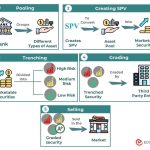
One of the most powerful aspects of home loan selling & securitization is the conversion of individual mortgages into structured financial products known as mortgage-backed securities (MBS). Financial institutions bundle hundreds or thousands of loans together and create securities that investors can purchase. These securities generate income from the monthly payments made by borrowers.
This process benefits multiple participants. Investors gain access to predictable income streams, lenders regain capital to issue new loans, and the overall financial system becomes more liquid. By distributing mortgage risk among many investors, securitization reduces the burden on individual lenders and strengthens financial stability.
The securitization structure involves multiple layers, including originators, aggregators, trustees, servicers, and investors. Each participant plays a defined role in ensuring compliance, managing payments, and maintaining accurate records. The complexity of this system highlights why transparency and proper documentation are essential components of home loan selling & securitization.
The Strategic Importance of Loan Transfers and Ownership Clarity
Clear documentation and proper transfer procedures are critical in home loan selling & securitization, especially when loans change hands multiple times. Each transfer must be properly recorded, and ownership must be legally established to ensure enforceability. Missing assignments, improper endorsements, or incomplete documentation can create legal vulnerabilities and disputes.
For financial professionals, legal experts, and auditors, verifying the chain of ownership is essential. Accurate records ensure that the current holder of the loan has the legal authority to collect payments or enforce foreclosure if necessary. This is particularly important in complex securitization structures where loans are pooled and managed by trusts.
Ultimately, home loan selling & securitization serves as a cornerstone of the modern mortgage market. It enables continuous lending, distributes financial risk, and creates investment opportunities while supporting homeownership growth. By understanding this process, professionals and stakeholders can better navigate the mortgage system, identify risks, and ensure compliance with financial and legal standards.
Conclusion: The Lasting Impact of Home Loan Selling & Securitization on the Mortgage Industry
In today’s highly structured financial environment, home loan selling & securitization has become an essential mechanism that sustains the flow of capital, strengthens lending capacity, and enhances the overall stability of the housing market. By allowing lenders to transfer mortgage ownership to investors, this process ensures that financial institutions can continue offering new loans without being constrained by long-term balance sheet limitations. This continuous cycle supports economic growth, expands access to homeownership, and improves liquidity across the mortgage ecosystem.
Equally important, home loan selling & securitization introduces a multi-layered structure involving originators, servicers, trustees, and investors, each playing a crucial role in maintaining transparency and operational efficiency. Proper documentation, accurate ownership records, and regulatory compliance are fundamental to ensuring the enforceability and legitimacy of loan transfers. These safeguards protect both borrowers and financial institutions while preserving trust in the mortgage system.
As the mortgage market continues to evolve, understanding home loan selling & securitization is no longer optional—it is a necessity for professionals, auditors, and stakeholders. This knowledge empowers individuals to identify risks, ensure compliance, and navigate complex loan ownership structures with confidence, clarity, and strategic advantage in an increasingly sophisticated financial landscape.
Elevate Your Case Strategy with Proven Securitization and Forensic Audit Expertise
Unlock the power of precision, clarity, and professional confidence with Mortgage Audits Online—your trusted partner in advanced securitization and forensic mortgage audits. For over four years, we have been empowering attorneys, mortgage professionals, investigators, and industry associates with detailed, evidence-driven audit reports designed to uncover critical loan data, identify securitization pathways, and strengthen case positioning.
When your clients’ financial future and legal standing are on the line, every document, transfer, and securitization detail matters. Our specialized forensic audit services are meticulously designed to help you uncover hidden loan ownership structures, verify chain-of-title accuracy, and expose discrepancies that could significantly impact legal and financial outcomes. As an exclusively business-to-business provider, we understand the professional standards, urgency, and reliability required to support your practice and deliver results you can stand behind with confidence.
Partner with a team that is committed to your success. Gain access to accurate, comprehensive, and professionally prepared audit reports that help you build stronger arguments, enhance your credibility, and deliver meaningful value to your clients.
Take the next step toward stronger case outcomes and professional excellence. Connect with Mortgage Audits Online today and experience the difference that precision forensic analysis can make.
Mortgage Audits Online
100 Rialto Place, Suite 700
Melbourne, FL 32901
📞 Phone: 877-399-2995
📠 Fax: (877) 398-5288
🌐 Website: https://www.mortgageauditsonline.com/